
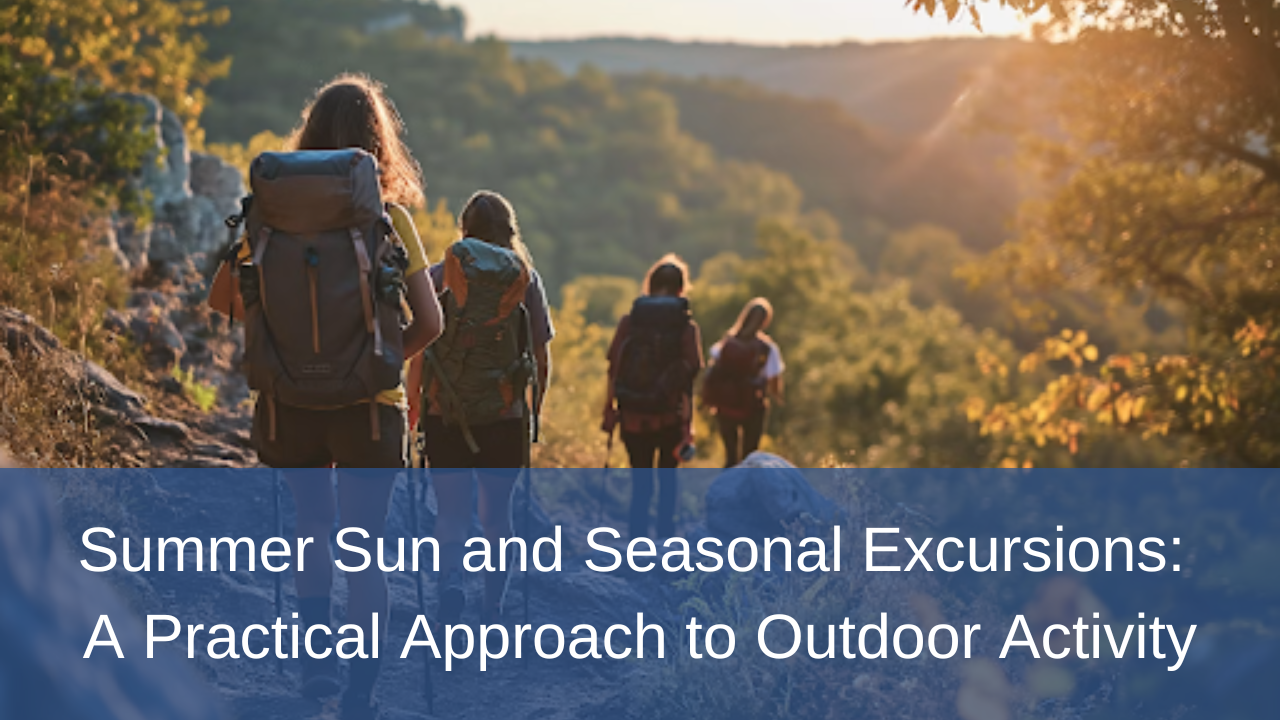
Summer Sun and Seasonal Excursions: A Practical Approach to Outdoor Activity
Summer creates a natural shift in how people spend time outside of work. Longer days and warmer weather make seasonal activities—such as hiking, travel, recreational sports, and extended time outdoors—more accessible than at any other time of year.
For working professionals, these activities are often concentrated into evenings, weekends, and vacations. This can lead to sudden increases in activity levels combined with prolonged sun exposure—factors that can affect energy, recovery, and overall physical performance.
Why Summer Activity Requires a Different Approach
Unlike consistent routines, summer excursions are often intermittent, longer in duration, and performed in higher temperatures. According to the Centers for Disease Control and Prevention, heat and dehydration can “affect the body’s ability to cool itself,” increasing fatigue and reducing physical performance.
Reframing Sun Exposure as a Performance Factor
Sunlight is often framed only as a risk, but in moderate amounts it supports overall health.
The National Institutes of Health notes that vitamin D—produced through sun exposure—“is important for bone health and muscle function.” In addition, the World Health Organization recognizes that regular physical activity, particularly outdoors, supports both mental well-being and energy levels.
The goal is not avoidance, but controlled exposure within beneficial limits.
Defining Effective Sun Exposure
More sun does not necessarily mean more benefit. Guidance from Health Canada suggests that short periods of sun exposure can help maintain adequate vitamin D levels, while emphasizing that overexposure increases health risks.
- Around 10–20 minutes of direct sun exposure is often sufficient, depending on skin type
- Midday sun is more intense, requiring shorter exposure
- Prolonged exposure without breaks can increase fatigue and dehydration
Planning Around Real-World Schedules
To support consistency and performance:
- Avoid sudden spikes in activity during weekends or vacations
- Gradually build into longer excursions
- Schedule activities earlier or later in the day
- Incorporate breaks rather than continuous exertion
The Public Health Agency of Canada also emphasizes the importance of balancing sun exposure with protective strategies during extended time outdoors.
Using Sun Exposure Strategically
A balanced approach is recommended. The Canadian Dermatology Association advises that sun protection measures—such as shade, clothing, and sunscreen—should be used during prolonged exposure, especially during peak UV hours.
- Begin with short periods of direct exposure
- Transition to protection for extended time outdoors
- Alternate between sun and shade
Hydration is equally critical, as even mild dehydration can reduce coordination and increase fatigue.
Summer offers a limited window for seasonal outdoor experiences. By approaching sun exposure as a manageable variable—alongside pacing, hydration, and planning—professionals can make the most of their time outdoors while supporting energy, recovery, and overall well-being.
***************************
Lina Emesayel
Fitness Center Manager, MBA, BCRPA Personal Trainer, Group Fitness and Fit Yoga Instructor
Curtis Health
This article was written with the assistance of AI and verified for accuracy.
Sources:
- Health Canada. Sun safety and vitamin D guidance.
- Public Health Agency of Canada. Ultraviolet radiation and health.
- World Health Organization. Physical activity and environmental health.
- Centers for Disease Control and Prevention. Heat, hydration, and outdoor activity safety.
- National Institutes of Health. Vitamin D and health outcomes.
- Canadian Dermatology Association. Sun exposure and skin health recommendations.