Calories are often misunderstood and unfairly labeled as “good” or “bad.” When in reality, a calorie is simply a unit of energy your body uses to fuel everything from movement and exercise to breathing and brain function. It’s not just how many calories you consume, but also the quality of the foods those calories come from. Let’s explore the difference between low and high-quality sources of calories.
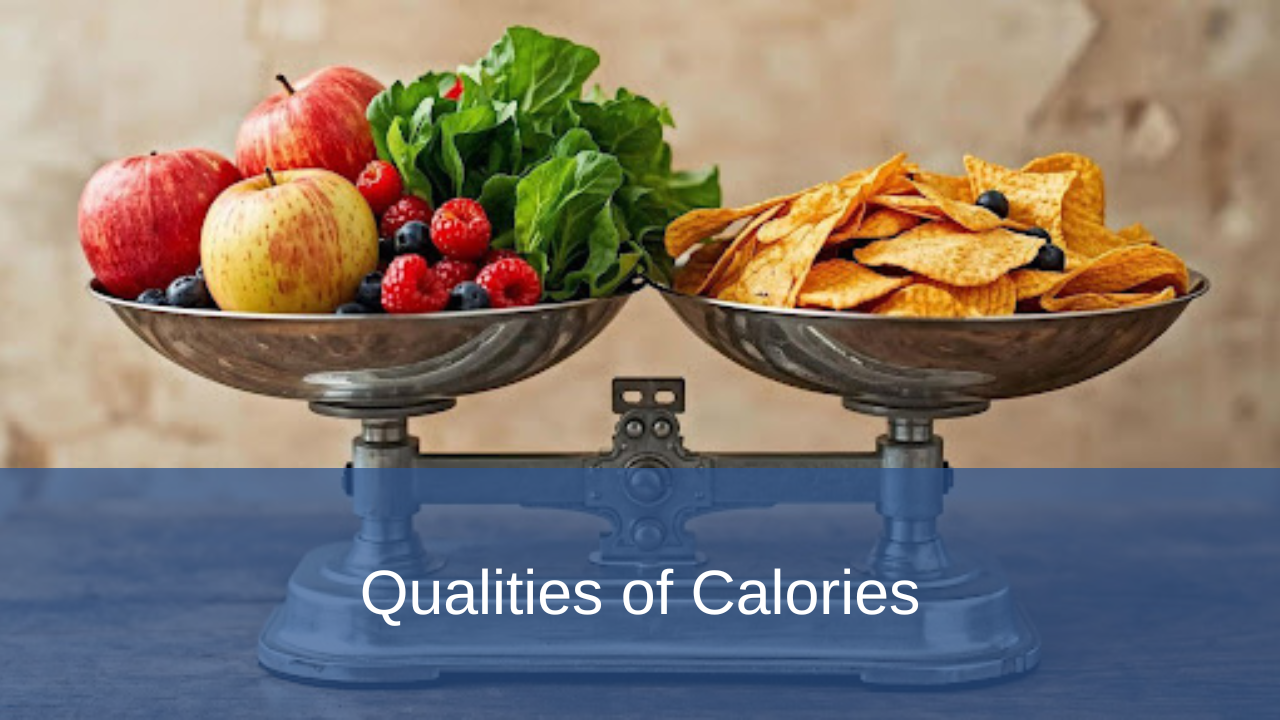
Highly processed foods are an example of a lower-quality source of calories. These items are often high in sugar, refined grains and unhealthy fats while providing little nutritional value. They may be calorie-dense, meaning they pack a lot of energy into small portions, however they lack essential nutrients such as fiber, vitamins and minerals that support overall health. Routinely relying on these foods can leave the body malnourished while being in a calorie surplus.
Whole or minimally processed foods such as fruits, vegetables, whole grains, lean proteins, nuts and seeds are examples of higher quality sources of calories. These foods provide a wide range of nutrients that support energy production, recovery, immune function and long-term wellness. More importantly, whole foods can be either low or high in calories. For example, vegetables are typically low in calories while still being nutrient-dense, and foods like avocados, nuts, and olive oil are higher in calories and nutrient-rich as well.
It’s also important to recognize that foods labeled as “healthy” are not always low-calorie. Smoothies, granola, trail mix and natural nut butters can be nutritious choices and still be calorically dense, especially in large portions.
Calories themselves are not the problem—they are simply energy. When your body uses that energy through daily activity and exercise, it supports performance and health. When more energy is consumed than burned, the body stores the excess for later use. Understanding the difference between low- and high-quality sources of calories helps shift the focus from restriction to nourishment, supporting better choices for both energy and overall wellbeing.
*******************
Jennica Fulton
Certified Nutritionist & Elite Personal Trainer
Curtis Health
* This blog/article has been written with the assistance of AI