As the summer temperatures climb, taking your workout outdoors can feel like an entirely different beast. While summer is the perfect season to push your fitness limits outside, higher temperatures and humidity place an immense amount of stress on your body.
To maintain peak athletic performance and—more importantly—stay safe, your hydration strategy needs a seasonal upgrade. Here is everything you need to know about staying perfectly hydrated for your summer fitness goals.
1. Signs of Dehydration and Heat Exhaustion
When you exercise in the heat, your body relies heavily on sweating to cool itself down. If you do not replace those lost fluids, you can quickly cross the line from mild dehydration into heat-related illnesses.
Knowing the warning signs can mean the difference between a great workout and a medical emergency.
Early Warning Signs of Dehydration
- Dark-colored urine (aim for a pale, straw-like yellow)
- Dry mouth or an unquenchable thirst
- Unexplained fatigue or a sudden drop in workout performance
- Mild headache or lightheadedness
When it Goes Into Heat Exhaustion
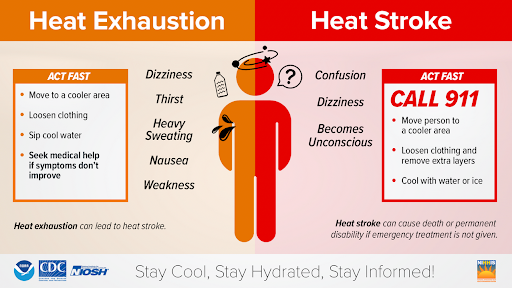
If dehydration goes unchecked, it can progress to heat exhaustion. If you or a training partner experience any of the following, stop exercising immediately, move to a cool or shaded area, and sip cool fluids:
- Profuse, heavy sweating
- Cold, pale, or clammy skin
- A rapid, weak pulse
- Nausea, dizziness, or fainting
- Muscle cramps
⚠️ Critical Safety Note: If heat exhaustion is left untreated, it can transition into Heat Stroke, a life-threatening medical emergency characterized by confusion, a throbbing headache, a body temperature above 103°F (39.4°C), and a total absence of sweat. Call 911 immediately if you suspect heat stroke.
2. Electrolytes vs. Plain Water: What Does Your Body Need?
We often use the terms “hydrating” and “drinking water” interchangeably, but they are not quite the same thing during hot summer workouts.
- Plain Water: Excellent for short, low-to-moderate intensity workouts lasting under 60 minutes.
- Electrolytes: Crucial minerals (like sodium, potassium, and magnesium) that regulate nerve and muscle function, balance blood pressure, and help rebuild damaged tissue.
When you sweat heavily, you do not just lose water; you lose salt. If you only replenish with plain water during prolonged, intense exercise, you risk diluting your body’s sodium levels. This can lead to a dangerous medical condition called hyponatremia (low blood sodium levels), which causes severe muscle cramping, confusion, and nausea.
The Summer Rule of Thumb:
- Under 60 Minutes: Plain water is perfectly fine.
- Over 60 Minutes (or very high humidity): Switch to an electrolyte-rich sports drink or add a hydration tablet to your water to keep your muscles firing efficiently.
3. Your Summer Hydration Timeline
Achieving peak performance isn’t about chugging a gallon of water right before you walk out the door. Effective hydration is an all-day, structured timeline.
1.Pre-Workout: Build the Reservoir: 2 to 4 hours before.
Drink roughly 16 to 20 ounces (approx. 500-600 mL) of water or a mild electrolyte drink. This gives your kidneys plenty of time to process the fluids and achieve optimal balance before you even start moving.
2.Intra-Workout: Consistent Sipping: Every 15 to 20 minutes.
Do not wait until you are thirsty—at that point, you are already mildly dehydrated. Aim for 7 to 10 ounces (approx. 200-300 mL) of water or electrolytes for every 20 minutes of hard summer training.
3.Post-Workout: Rehydrate and Rebuild: Within 2 to 4 hours after.
The goal is to replace what you lost. A great trick is to weigh yourself before and after a hot workout. For every pound of body weight lost through sweat, drink 16 to 24 ounces of water or an electrolyte recovery drink.
4. The Hidden Dehydrator: Limit Alcohol Consumption
It is highly tempting to celebrate a tough summer run or outdoor workout with a cold beer or a crisp cocktail. However, if performance and recovery are your goals, timing is everything.
Alcohol is a natural diuretic, meaning it signals your kidneys to flush water out of your body at an accelerated rate rather than absorbing it.
Why Alcohol and Summer Fitness Don’t Mix:
- Compounded Dehydration: Drinking alcohol while already dehydrated from a workout severely delays your recovery process.
- Disrupted Thermoregulation: Alcohol alters your blood vessels’ ability to dilate, making it much harder for your body to regulate its core temperature effectively the next day.
- Reduced Muscle Synthesis: It actively hinders muscle protein synthesis, meaning your body can’t properly repair the muscles you just worked so hard to train.
The Strategy: If you choose to indulge in a summer beverage, ensure you have completely rehydrated with water and electrolytes first, and match every alcoholic drink with a full glass of water.
Jess Chung, Certified Personal Trainer
*This article/blog has been written with the assistance of AI
Sources
- American College of Sports Medicine (ACSM) Position Stand
Convertino, V. A., Armstrong, L. E., Coyle, E. F., Mack, G. W., Sawka, M. N., Senay, L. C., & Sherman, W. M. (1996). ACSM Position Stand: Exercise and Fluid Replacement. Medicine & Science in Sports & Exercise, 28(10), i-ix. https://doi.org/10.1097/00005768-199610000-00045
Cited by: 867 - National Athletic Trainers’ Association (NATA) Position Statement
McDermott, B. P., Anderson, S. A., Armstrong, L. E., Casa, D. J., Cheuvront, S. N., Cooper, L., Kenney, W. L., O’Connor, F. G., & Roberts, W. O. (2017). National Athletic Trainers’ Association Position Statement: Fluid Replacement for the Physically Active. Journal of Athletic Training, 52(9), 877-895. https://doi.org/10.4085/1062-6050-52.9.02
Cited by: 639 - Recent Evidence on Personalized Hydration in Heat
Li, H., Early, K. S., Zhang, G., Ma, P., & Wang, H. (2024). Personalized Hydration Strategy to Improve Fluid Balance and Intermittent Exercise Performance in the Heat. Nutrients, 16(9), 1341. https://doi.org/10.3390/nu16091341
Cited by: 15