Building the lifestyle you want doesn’t happen overnight—it happens one habit at a time. In a busy corporate environment, it’s easy to focus on big goals without setting up the daily systems that make them achievable. Behavioral science research shows that small, intentional actions repeated consistently lead to lasting change, especially when designed to fit your context and identity.
Whether your goal is to move more, eat healthier, or manage stress, these six practical strategies will help you design routines that stick—without adding extra stress to your workday.
1. Focus on Systems, Not Just Goals
Goals describe what you want (e.g., “lose weight” or “be more active”), but systems are what make it happen. A system is the daily routine and infrastructure that supports your behavior—like scheduling specific movement breaks, prepping healthy snacks, or setting calendar reminders. As habit experts – James Clear notes, “You do not rise to the level of your goals; you fall to the level of your systems.”
2. Make Habits Obvious
Habits are triggered by cues in your environment. The more visible and clear those cues are, the more likely you are to respond consistently:
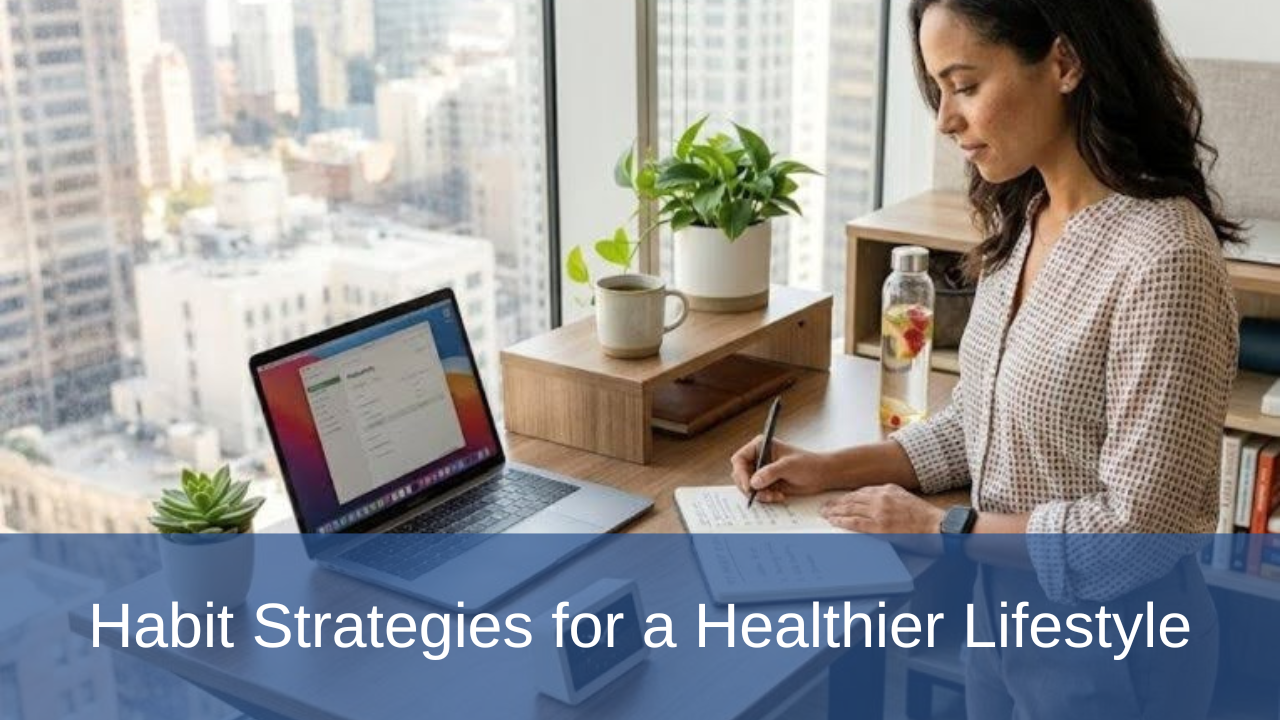
- Desk setup: Keep a full water bottle directly on your desk.
- Visual cues: Place your step tracker or workout gear where you’ll see it immediately.
- Reminders: Set recurring calendar alerts for micro-movements or mental breaks.
- Designing your environment is key – as one behavioral research shows that noticing the cue is often the hardest part
3. Make Habits Attractive
Habits that feel good are easier to repeat. Tap into your natural motivation by pairing tasks with enjoyable experiences:
- Listen to a favorite podcast or audiobook exclusively during your daily walk.
- Pair short desk stretches with your favorite playlist.
- Use wellness apps that add a gamified layer to tracking your progress.
4. Make Habits Easy
Reduce friction for healthy habits and increase friction for unhelpful ones. Your brain naturally prefers the path of least resistance:
- Pre-pack healthy lunches or snacks the night before.
- Keep a pair of walking shoes or sneakers at your office desk.
- Lay out your gear beforehand so starting takes zero effort.
5. Make Habits Satisfying
Immediate rewards reinforce behavior and help lock habits into your daily routine:
- Track your streak using visual checklists or habit-tracking apps.
- Celebrate small wins and daily consistency.
- Share progress with colleagues or friends for social support and shared accountability.
6. Focus on Identity, Not Just Outcomes
Long-term change comes from shifting your identity—becoming the kind of person who naturally performs the habits you want. Every small action is a vote for the person you want to become:
- Shift “I need to exercise” to “I am an active person.”
- Shift “I want to eat better” to “I make choices that fuel my energy.”
Key Takeaway
Small, consistent habits compound over time—much like financial compound interest. By focusing on systems, visibility, enjoyment, simplicity, satisfaction, and identity, you can create a sustainable lifestyle that supports your health, productivity, and overall well-being.
Jess Chung, Certified Personal Trainer
*This article/blog has been written with the assistance of AI
Sources
- Clear, James. Atomic Habits: An Easy & Proven Way to Build Good Habits & Break Bad Ones.
- System and Identity Strategy Overview: Michael D. McGill – Atomic Habits Breakdown
- Friction and Habit Automation Insights: Curtis McHale – Building Systems That Stick