Curtis Health
  • Home
  • About Us
    • The Curtis Heritage
    • Meet the Team
  • Programs for
    • Employers
    • Property Managers and Building Owners
    • Individuals
  • Virtual Services
  • Careers
  • Contact Us
    • How Can We Help?
    • Leave a Review
  • Blog
  • Thrive
    • Recorded Zoom Classes
    • Log In

Get Back on Track: 7 Strategies to Help You Bounce Back After Slipping Up

Posted on September 1, 2016
by Kerri McBeath
9630418308_11c4bc74db_m
 This article has some great tips on getting yourself back on track if you’ve strayed from your regular routine over the summer.  Remember, you don’t have to be back in the saddle the first week:  take some time and form a strategy that sets you up for success in the long run.
By James Clear    |   

We’ve all been there…

You follow your diet religiously for a week and then break it with a weekend binge. You commit to working out more, hit the gym for two days, and then struggle to get off the couch after a long day of work. You set a vision for your career and get excited by the possibilities, only to get dragged down in everyday responsibilities and not return to your dream until months later.

I’ve been there too, but as time rolls on I’m beginning to realize something important:

These small hiccups don’t make you a failure, they make you human. The most successful people in the world slip up on their habits too. What separates them isn’t their willpower or motivation, it’s their ability to get back on track quickly.

There will always be instances when following your regular routine is basically impossible. You don’t need superhuman willpower, you just need strategies that can pull you back on track. Habit formation hinges on your ability to bounce back.

With that said, here are seven strategies that you can use to get back on track right now…

1. Schedule your habits into your life.

Give your habits a specific space in your life. There are two main options for making this happen…

Option 1: Put it on your calendar.

Want to get back on track with your writing schedule? 9am on Monday morning. Butt in chair. Hands on keyboard. That’s when this is happening.

Want to exercise? Give yourself a time and place that it needs to happen. 6pm every Monday, Wednesday, and Friday. I’ll see you in the gym.

Option 2: Tie it to your current behavior.

Not all of your habits will fit a specific time frame, but they all should have a trigger that acts as a reminder to do them.

Want to floss? Everyday after brushing your teeth. Same order, same way, every time.

Want to be happier? Every time you stop at a red light, tell yourself one thing you’re grateful for. The red light is the reminder. Same trigger, same sequence, every time.

The bottom line is this: it might be nice to tell yourself that you’re going to change, but getting specific makes it real and gives you a reason and a reminder to get back on track whenever you slip up.

Soon is not a time and some is not a number. When and where, exactly, are you going to do this? You might forget once, but what system do you have in place to automatically remind you the next time?

2. Stick to your schedule, even in small ways.

It’s not the individual impact of missing your schedule that’s a big deal. It’s the cumulative impact of never getting back on track. If you miss one workout, you don’t suddenly feel more out of shape than you were before.

For that reason, it’s critical to stick to your schedule, even if it’s only in a very small way.

Don’t have enough time to do a full workout? Just squat.

Don’t have enough time to write an article? Write a paragraph.

Don’t have enough time to do yoga? Take ten seconds to breathe.

Don’t have enough time to go on vacation? Give yourself a mini–break and drive to the neighboring town.

Individually, these behaviors seem pretty insignificant. But it’s not the individual impact that makes a difference. It’s the cumulative impact of always sticking to your schedule that will carry you to long–term success.

Find a way to stick to the schedule, no matter how small it is.

3. Have someone who expects something of you.

I’ve been on many teams throughout my athletic career and you know what happens when you have friends, teammates, and coaches expecting you to be at practice? You show up.

The good news is that you don’t have to be on a team to make this work. Talk to strangers and make friends in the gym. Simply knowing that a familiar face expects to see you can be enough to get you to show up.

4. Focus on what you can work with.

We waste so much time focusing on what is withheld from us.

This is especially true after we slip up and get off track from our goals. Anytime we don’t do the things we want to do — start a business, eat healthy, go to the gym — we come up with excuses…

“I don’t have enough money. I don’t have enough time. I don’t have the right contacts. I don’t have enough experience. I need to learn more. I’m not sure what to do. I feel uncomfortable and stupid.”

Here’s what I want you to think instead:

“I can work with this.”

Because you can. The truth is that most of us start in the same place — no money, no resources, no contacts, no experience — but some people (the winners) choose to get started anyway.

It’s not easy, but I promise you that your life will be better if you choose to feel uncomfortable and make progress, rather than complain and make excuses. Shift your focus from what is withheld from you to what is available to you.

It’s rare that your circumstances prevent you from making any progress. You might not like where you have to start. Your progress might be slow and unsexy. But you can work with this.

5. Just because it’s not optimal, doesn’t mean it’s not beneficial.

It’s so easy to get hung up on doing things the optimal way and end up preventing yourself from doing them at all.

Here’s an example…

“I really want to eat Paleo, but I go to Chipotle every Friday with my friends and I like to get sour cream and cheese on my burrito and I know that’s not Paleo. Plus, I have a book club meeting every Tuesday and we always have ice cream and I don’t want to be the only one not joining the group. Maybe I should try something else?”

Seriously? Is eating clean five days per week better than not eating clean at all?

Yes, I believe it is.

In fact, eating healthy one day per week is better than none at all. Make that your goal to start: eat clean every Monday.

Just because you can’t stick to the optimal schedule, doesn’t mean you shouldn’t stick to it at all. Good habits are built gradually. Start slow, live your life, and get better along the way. Progress is a spectrum, not a specific place.

Furthermore, if you haven’t mastered the basics, then why make things harder for yourself by fretting about the details?

The optimal strategies will make the last 10% of difference. Meanwhile, 90% of your results will hinge on you simply sticking to the basics: don’t miss workouts, eat real food, do the most important thing first each day. Master the fundamentals now. You can optimize the details later.

6. Design your environment for success.

If you think that you need more motivation or more willpower to stick to your goals, then I have good news. You don’t.

Motivation is a fickle beast. Some days you feel inspired. Some days you don’t. If you want consistent change the last thing you want to rely on is something inconsistent.

Another great way to overcome this hurdle and get back on track is to design your environment for success.

Most of us acknowledge that the people who surround us influence our behaviors, but the items that surround us have an impact as well. The signs we see, the things that are on your desk at work, the pictures hanging on your wall at home … these are all pieces of our environment that can trigger us to take different actions.

When I wanted to start flossing consistently, one of the most useful changes I made was taking the floss out of the drawer and keeping it next to my toothbrush on the counter. It sounds like a silly thing to focus on, but the visual cue of seeing the floss every time I brushed my teeth meant that I didn’t have to remember to pull it out of the drawer.

With this simple environment change, I made it easy to do the new habit and I didn’t need more motivation or willpower or a reminder on my phone or a Post-It note on the mirror.

If you want to hear more about my riveting flossing adventures (and how to stick to small healthy habits), read this.

Another example of environment design is the “green plate trick” that I suggest as an easy way to lose weight and eat more green vegetables. You can read about this strategy (and about the research explaining why it works) in this article.

7. Care.

It sounds so simple, but make sure that the habits that you’re trying to stick to are actually important to you.

Sometimes forgetting your habit is a sign that it’s not that important to you. Most of the time this isn’t true, but it happens often enough that I want to mention it.

It’s remarkable how much time people spend chasing things that they don’t really care about. Then, when they don’t achieve them, they beat themselves up and feel like a failure for not achieving something that wasn’t important to them all along.

You only have so much energy to put towards the next 24 hours. Pick a habit that you care about. If it really matters to you, then you’ll find a way to make it work.

Get Back on Track

Change can be hard. In the beginning, your healthy habits might take two steps forward and one step back.

Anticipating those backwards steps can make all the difference in the world. Develop a plan for getting back on track and recommit to your routine as quickly as possible.
Read More→

Nutrition and Exercise

Practical Tips for Clean Eating

Posted on September 1, 2016
by Kerri McBeath
No Comments

13384051455_fd0ac20a17_m


Let me start this blog post with a confession:  I like to eat.  And I like to cook.  So dieting has never been a really good option for me.  I lost 33 pounds on Weight Watchers years ago, but as they say it’s not a diet, it’s making lifestyle changes that you can live with long term.  And I did make some very important lifestyle changes through the program:  I stopped drinking Coke because I couldn’t stand the aftertaste of Diet Coke; I had a reality check on portion sizes (especially when eating out); and I learned about coping strategies for emotional eating.  I actually became a WW leader – I shared my story and helped to support those trying to lose weight.  Read More→

Nutrition and Exercise

10 Preboarding Secrets to Staying Healthy When You Fly

Posted on August 1, 2016
by Kerri McBeath

6327493213_2db19a6023_m

When we think of airplane safety, we think of the big picture –  plane crashes or emergency landings.  But flying also has smaller health risks.  Take a look at the following article for the some tips for staying healthy if you have plane travel as part of your summer vacation.  Enjoy!

By Melanie Haiken, Caring.com senior editor

Staying healthy when you fly starts with being well prepared. Here are ten preboarding secrets, culled from frequent fliers, on what to do to protect yourself from colds, flu, and other ills.

1. Carry an empty water bottle through security.

The chances of reliable, frequent beverage service aren’t high these days, unless you’re lucky enough to fly business class. Yet getting and staying hydrated before and during your flight is the best way to protect yourself against getting sick. That’s because lack of humidity in the pressurized cabin dries out mucous membranes, making it harder for your system to flush out germs.

What to do: Although you can’t bring liquids through security, you can bring an empty bottle. Fill it at the water fountain as soon as you’re through, and then drink up and hydrate before you fly — and during the flight. Once on the plane, don’t be shy about asking the attendant to fill your bottle for you. Even if they’re not coming through often with the cart, there’s water in the back.

2. Use the restroom before boarding — with caution.

Most people know not to touch a public toilet seat any more than necessary, but it’s less well known that flushing also transmits germs. And the closer you stand to the toilet, the more you’re in the “line of fire.” Researchers studying this problem measured the microorganisms in the air and on nearby surfaces after the first and subsequent flushes and found that “large numbers of microorganisms persisted on the toilet bowl surface and in the bowl water, which were disseminated into the air by further flushes.”

What to do: Use a public restroom before you board and onboard restrooms as infrequently as possible, since it’s impossible to stand more than a couple of feet away. Close the lid before flushing, using a paper towel between your hand and the lid and handle. And wash your hands thoroughly after flushing, using a paper towel to turn off the faucet.

3. Prevent dry eyes.

Studies show that lack of humidity in the enclosed space of the airplane cabin is one of the primary reasons for the higher risk of getting sick while flying. When your eyes are dry, it’s more tempting to rub them, but touching your eyes is one of the primary means of transmitting cold and flu viruses. If you have germs on your hands, they can travel through the tear ducts to the nasopharynx at the back of the throat, where cold viruses do their damage.

What to do: Wash your hands frequently and thoroughly and avoid touching your eyes. If you wear contact lenses, remove them before boarding (after washing your hands) and wear your glasses on the plane. Never let yourself fall asleep with your lenses in, as your eyes will become even drier that way.

4. Pack a blanket and pillow.

Few airlines provide blankets anymore, and the ones they do offer can harbor germs. In fact, during the H1N1 flu scare, several airlines removed all blankets and pillows from flights as a precaution against cold and flu transmission.

Read More→

Mind/Body Wellness

6 Summer Safety Tips You Need to Know

Posted on August 1, 2016
by Kerri McBeath
No Comments
16800384582_82bfe8ae70_m
Most of us don’t want to focus on summer safety:  we want to go out and have fun with our families or friends.  But as the article below states, if you’re prepared, a small issue can stay small and not result in a time-consuming (and sometimes expensive if you’re out of the country) ordeal.  Give it a read!

BY BEST HEALTH

Summer is a great time to get outside, have fun and enjoy a wide range of activities, whether you’re camping, cottaging or hanging out by the pool. However, it’s also a time for prevention ‘staying safe and protecting your family from summer-related injuries.

“In summer, we tend to let our guard down,” says Shannon Koppenhoefer, an Ontario-based paramedic, who specializes in wilderness first-aid. “But the biggest way to stay safe is preparation.”  Read More→

Mind/Body Wellness

Your Own Vacation Triathlon

Posted on August 1, 2016
by Kerri McBeath
No Comments

3618128274_e844780422_m

I met up with some acquaintances that I hadn’t seen in a couple of years.  I found out that one of the couples was going to do their first triathlons the next day.  I was impressed as I never thought of them as the tri types and it was certainly not something that I had ever considered doing.

So it got me to thinking:  while you’re on holidays and away from your regular workout routine, could you create your own “holiday triathlon” to keep you on track with your fitness?  You don’t have to work to the extent of a real tri but using the concept of 3 different exercises to work muscles differently and avoid boredom.  Read More→

Nutrition and Exercise

Send Yourself to Fitness Summer Camp

Posted on July 19, 2016
by Kerri McBeath
No Comments

9229734631_f00273d1ff_m

By Kerri McBeath

Remember when you were a kid and you went to summer camp?  Some may not have pleasant memories, but most kids enjoyed getting out of the city and spending some time away from their parents and siblings and getting their first taste of independence.

So this summer, how about if you send yourself to fitness summer camp?  I don’t mean pack up your sleeping bag and head to Camp Lake in the Woods  – I mean while you’re on holidays and away from the gym, make sure you continue working out so you don’t have to get back on track in September.

To keep on track with your regular fitness workouts, you should be incorporating all the components of fitness:  cardiovascular endurance, muscular strength and endurance and flexibility.  Below are some suggestions:

Cardio Endurance:  Swimming

Hiking; running; walking  

Muscular Strength and Endurance:

Golf (lower body and core)

Hiking (lower body)

Canoeing and kayaking (upper body and core)

Flexibility:  How about a nice outdoors yoga class? 

All over workout:  Swimming; Tennis anyone?

Remember that the reason parents send their kids to summer camp is so they can experience new things and meet new people, as well as have fun.  Make sure you’re experiencing these things too.

Getting Outdoors

6 Best and Worst Foods and Drinks for Summer

Posted on July 7, 2016
by Kerri McBeath
11 Comments

“Summertime and the living is easy” or so goes the old song.  We all want to relax and not work so hard in the kitchen – it’s hot and we’re ready to change up the routine.  But a lot of traditional summer fare is loaded with calories, fat, sugar and sodium.  Below you will find super summer foods and some that you should avoid.

Read the following article excerpted from healthfitnessmag.com that lists some of the worst nutritional offenders, as well as some of the best.

6 BEST AND WORST FOODS

Rebecca Miller, MPH, RD, LDN

1. Deli meat – Even though meats like turkey, chicken, ham and roast beef are lean protein sources, it can come with a high price in the form of sodium.   Try to use baked/roasted skinless chicken, beans/legumes, or sliced hard boiled eggs in the place of your standard cold-cuts on a sandwich, low carb/high fiber tortilla, or lettuce wrap.

2. High fat meats – The saturated fat found in animal meats poses many negatives impacts on our health ranging from higher calorie content to increased risk of high cholesterol and heart disease. Select leaner meats and trim off any visible fat. Instead of a rib-eye or porterhouse steak, opt for a filet, tenderloin, or sirloin steak.

3. Chips – Often grabbed in a pinch for a quick snack chips, whether fried or baked, add sodium and empty calories to our diet since they lack beneficial nutrients like fiber and protein.  Try Beanitos, for about 140 calories per serving, you’ll at least get some fiber and protein from the beans to keep your hunger at bay.

AND DRINKS FOR SUMMER

4. Lemonade – Most of us know the high sugar and calorie content of regular-sugary sodas and sweet tea, but you might not lump lemonade in this category as well, even though you should! With just as much sugar (if not more) than in a soft drink, lemonades often get a ‘better for you vibe’.  Make your own version with a non-calorie plant based sweetener like Truvia or New Orleans locally-owned company Swerve rather than granulated sugar or even honey or agave.

5. Sports drinks – Here’s another sugar and calorie source in the form of a liquid that can quickly add up to undesired calorie consumption during the day. It’s a common myth that the average American needs a sports drink to replenish electrolytes after a hot day in the sun or workout.  Try the zero versions to get rid of the empty calories or try the plant-based sweetened water enhancers to quench your thirst and hydrate you this summer.

6.  Coconut water – Another beverage that gets a lot of press these days due to its popularity to replenishing lost electrolytes is coconut water. The sodium and potassium can be good for endurance enthusiasts or athletes, but for someone trying to lose weight/eat healthier or has high blood pressure or impaired kidney function, this is not always your best bet.  Select no-sugar-added varieties or plain coconut water if you fall into the category of truly needing the potential benefits of this drink.

6 Super Summer Foods and Beverages

Water Enhancers – Spice up your beverages and the likelihood of increasing your fluid intake by flavoring your water or unsweetened tea with flavor enhancers such as Stur or Crystal Light Pure, both of which are made with plant-based sweetener and add little-to-no calories.

Chicken Sausage – Look for nitrate/nitrite free sausages that make great swap-outs to high fat hot dogs, brats, and sausages.

Any Fresh Fruit – Simply add to the blender with your morning smoothie, pair together with a 100-calorie pack of nuts as an afternoon snack, or save for your after-dinner dessert since they add hydration, vitamins, minerals, and nutrients and some fiber to your day.

Any Non-starchy Vegetable – Toss them together in a salad, dip them in a 100-calorie to-go portion of hummus or guacamole, or throw them on the grill for low calorie, higher fiber snacks or sides to your meal.

Plain Greek Yogurt – A great protein source that also counts towards your fluid needs for the day. Use it as the protein source for your morning smoothie, make your own parfait with fresh fruit and a sprinkling of lower sugar granola or Kashi go lean cereal, or substitute it for mayo or sour cream in your favorite homemade dip or dressing. To sweeten it up without adding sugar to it (like with the vanilla or flavored varieties), just mix in some vanilla extract and plant-based sweetener like Truvia.

Dressings and Marinades – While some may be slightly higher in sugar, fat, or sodium, if you’re using just a little bit, it can be an easy way to add versatility to your usual salad or to marinate your meats before throwing them on the grill.  A good rule of thumb is go with the reduced-fat ones rather than original or ‘free’ varieties.

Rebecca Miller, MPH, RD, LDN is a registered dietitian nutritionist with Ochsner’s Elmwood Fitness Center. She writes a blog called Twisted Nutrition and can be found at twistednutritionandme.blogspot.com.

Nutrition and Exercise

Core Travel Workout – perfect for a hotel room floor!     

Posted on July 7, 2016
by Kerri McBeath
No Comments

By Laurie B, Certified Personal Trainer

Whether you’re traveling for business or on a family holiday, it’s difficult sometimes to fit in a workout.  But chances are you have 10 minutes everyday for a quick core workout that you can even do in your hotel room…or by the pool if you’re feeling brave!

Do each exercise at a slow tempo for 45 seconds.  Repeat the Circuit.

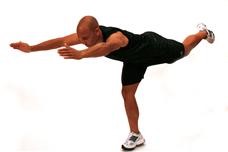
Standing Superman makes a great warm up, improves balance and engages the core muscles. Remember not to hold your breath and turn your thumbs up.  Alternate sides, increasing the time you can hold the position…it’s great in bare feet too.

Standing Superman

Read More→

Nutrition and Exercise

Keeping Fit in the Summer when your Regular Routine Disappears

Posted on July 7, 2016
by Kerri McBeath
No Comments

OK, so you’ve already made and kept your commitment to regular exercise during the fall, winter and spring months.  But along comes summer and all of a sudden your commitment wanes and when September arrives you haven’t been to the gym in 2-3 months.  This can make you feel like you’re back at square one again and that little voice in your head says “I blew it”.

Here’s a list of some of the challenges you may face adhering to your fitness in July and August and some suggestions to keep you on track.  Remember, just maintaining and not seeing progress during this time is OK too.

“The kids are out of school and I’m too busy with their activities”

Depending on the activities your kids are involved in, this doesn’t have to hold you back.  If your kids are taking swimming lessons, see if you can swim a few laps during their lesson.  Go for a walk while they’re at baseball practice or dance class.

“My relatives are here for weeks at a time”

Take them on hikes/walks so they can see more than just your backyard.  On rainy days, go bowling.  You may even be able to squeeze some baby-sitting out of visiting grandparents and hit the gym once in a while.

“I usually go to the gym at work”

Think outside the box and try some outdoor activities.  Try a round of pitch and putt golf, go kayaking or do the Grouse Grind.

“We’re visiting relatives out of province for 2 weeks”

Include your family in your fitness.  Just like you can show them around your town doing outdoor activities, ask to see their neck of the woods via walking, hiking or visiting local sites.  Include a healthy picnic lunch and your day is made.

“I’m spending money on summer camps and daycare for my kids”

How about saving money on a gardener by mowing your own lawn.  Depending on the size of the lawn, you can burn around 300 calories in an hour of lawn mowing.

“The weather is too good to go to the gym”

Then take your workout outside – you can walk or run in the park, do a body weight workout, try an open water swim at the beach…make sure there is a lifeguard on duty and that you’re a strong enough swimmer for the conditions.

“I don’t have childcare so I can’t go to the gym”

Include your kids in your workout.  If they’re old enough, take them to the tennis courts or shoot some hoops in the park.  How about starting a neighborhood street hockey game?

Whatever you do, don’t stress about it.  When September comes, things will settle down and you’ll get back into your fitness routine.  When that time comes and you need some extra help, think about a Curtis Health certified personal trainer, who can motivate you, help you with goal setting and create a fitness program tailored just for you.


Uncategorized

Can some drugs make me more sensitive to the sun?

Posted on July 5, 2016
by Kerri McBeath
No Comments

Sun sensitivity is a subject near and dear to my heart – for my entire adult life, I have had to either slather myself with sunscreen (some of which exacerbated the problem: more on that in the article) or avoid the sun altogether.  

To this day, I still don’t know exactly why I’m so sun-sensitive.  It could be my Irish heritage of pale skin and blue eyes, but I’ve often wondering why I don’t just sunburn, I get a red, itchy reaction like hives when I’m in the sun for short periods of time and why this started in my adult life, not as a child

While avoiding the sun has helped keep my face almost wrinkle-free, I have missed out on participating in activities that I enjoy, like golfing, due to the extended time I would have to spend in the sun.

Give a read to the following article from consumerreports.org which outlines the difference between photosensitivity and phototoxicity, lists the drugs that may contribute or cause these and what you can do to keep yourself safer in the sun.

A surprising number of medications make your skin more vulnerable to the sun’s ultraviolet radiation—an effect you might not be aware of until after a ruined summer outing. Some medications increase your risk of regular sunburn others cause something called photosensitivity, which increases the risk of painful or itchy rashes.

“When we say that a drug causes photosensitivity, we mean that the medication causes a chemical change in the skin that makes it react abnormally to the sun’s ultraviolet rays” said Jessica Krant, M.D., assistant clinical professor of dermatology at the State University of New York Downstate Medical Center in New York City and a member of Consumer Report’s medical advisory board. “That photosensitivity comes in two basic forms, phototoxic and photoallergic reactions.”

Phototoxic reactions, the most common form, occur when UV rays interact with a medication—either something you took or applied to your skin—to directly damage skin cells. Those reactions typically take the form of a rash that looks like a bad sunburn and come on quickly, appearing within minutes or hours of sun exposure. The effects can sometimes linger long after the drug is stopped, Krant says. So if you’ve had a reaction, be extra cautious about sun exposure for awhile, even if you have stopped taking the drug.

Photoallergic reactions occur when UV rays cause chemical changes that cause your body to treat a substance as an allergy. They take the form of an itchy rash that develops 24 to 48 hours after you’ve been in the sun. Something you apply to your skin, such as an antiseptic or topical form of a nonsteroidal anti-inflammatory drug, can cause a reaction, but so can some systemic medications. Other substances that can cause photoallergic reactions in some people are fragrances and, surprisingly, sunscreens. If you think you may have suffered a photoallergic reaction, enlist your doctor’s help in identifying the culprit and finding an alternative. For example, the sunscreen ingredients titanium dioxide and zinc oxide typically don’t cause allergic reactions.

A painful sunburn or miserable rash can spoil your summer fun. To play it safe, Krant recommends asking your doctor or pharmacist if anything you are using can cause sun sensitivity. Remember to include supplements in that conversation, Krant says. For example, the herb St. John’s wort can cause phototoxic reactions.

The table below lists some of the offenders. If you’re using any of them, you should be especially careful to take the following steps to protect yourself from the sun’s powerful rays.

Drugs that increase sun sensitivity

Use

Drug names*

Acne and aging skin Benzoyl peroxide (Clean & Clear Continuous Control Acne Cleanser, PanOxyl), salicylic acid (Clearasil Pore Cleansing Pads), and tretinoin (Retin-A, Renova)
Bacterial infections Fluoroquinolone antibiotics such as ciprofloxacin (Cipro) and gemifloxacin (Factive)

Sulfa antibiotics such as sulfadiazine

Tetracycline antibiotics such as demeclocycline (Declomycin) and doxycycline (Doryx, Vibramycin)

Depression Tricyclic antidepressants such as amitriptyline and imipramine (Tofranil)
Disinfecting skin Topical chlorhexidine
Fungal infections Voriconazole (Vfend), griseofulvin (Grifulvin V)
High blood pressure Thiazide diuretics such as chlorothiazide (Diuril) and hydrochlorothiazide
Itching Topical diphenhydramine (Benadryl Itch-Stopping Gel)
Malaria Quinidine (also used to treat heart arrhythmias), quinine (Qualquin)
Nausea and vomiting Prochlorperazine (Compro)
Osteoarthritis Piroxicam (Feldene)
Pain, fever, and inflammation Nonsteroidal-anti-inflammatory drugs such as ibuprofen (Advil), ketoprofen (Nexcede), naproxen (Aleve, Naprosyn)

Topical NSAIDs such as diclofenac (Pennsaid, Voltaren gel)

Psoriasis Methoxsalen (8-Mop, Oxsoralen)

*Many of the drugs listed are also available as generics.

How to protect yourself

  • Use sunscreen. Choose a water-resistant product that’s labeled “broad spectrum,” which means that it’s formulated to protect against UVA and UVB radiation. Apply it 15 to 30 minutes before you go out to give it time to soak into your skin, and reapply every two hours or after swimming or sweating heavily.
  • Cover up. Wear sun-protective clothing (dark-colored material with a tight weave) and a wide-brimmed hat when outdoors. A dark, nonreflective underside of the brim can also help cut down on the amount of UV radiation that reaches your face from reflective surfaces such as water.
  • Seek shade. Avoid being out in the early afternoon, when the sun’s rays are at their peak. As a rule of thumb, if your shadow is shorter than you are, the UV light is at its strongest.
  • Get a consultation. Have a discussion with your doctor about whether it would be appropriate to stop some higher-risk medications (such as some antibiotics) one week before a planned sun exposure.
Uncategorized
← Previous Page
Next Page →

Recent Posts

  • The Missing Link in Corporate Wellness
  • Small Tweaks, Big Gains: How to Level Up Your Workouts
  • Habit Strategies for a Healthier Lifestyle
  • Hydration for Summer Fitness Performance
  • Reframing Strength as Total Wellness

Home | About Us | Meet the Team | How Can We Help? | Careers | Employers | Property Managers | Individuals | Contact Us | Privacy Policy

Copyright © 2026 Curtis Health

CURTIS_LOGO_NEW_Blue

Serving Vancouver and the Lower Mainland | Telephone: 604.921.2348

Subscription Terms & Conditions
  1. Billing
    • Your credit card will be automatically charged each month through Square.
  2. Commitment & Cancellation
    • There is no long-term contract.
    • You may cancel your subscription by contacting us directly. Please allow 5 business days for processing prior to your next billing date to avoid additional charges.
    • As our class schedule is organized on a monthly basis, partial months will not be refunded or pro-rated.
    • Your subscription is for your individual enjoyment only. Please do your part to ensure appropriate use of our content.
Curtis Health Is Partnering With Kintec: Footwear + Orthotics

Kintec is offering all Curtis clients (including friends and family) expert shoe fitting to best suit your needs at a 15% discount on regular price footwear. 

Click here to access coupon code

Workshop Information Request