Curtis Health
  • Home
  • About Us
    • The Curtis Heritage
    • Meet the Team
  • Programs for
    • Employers
    • Property Managers and Building Owners
    • Individuals
  • Virtual Services
  • Careers
  • Contact Us
    • How Can We Help?
    • Leave a Review
  • Blog
  • Thrive
    • Recorded Zoom Classes
    • Log In

Archive for Nutrition and Exercise – Page 6

Ten Diet Changes That Have The Most Impact

Posted on January 5, 2017
by Kerri McBeath
No Comments

veggies

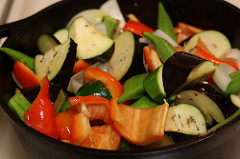
Probably one of the most common New Year’s resolutions is to eat healthier.  For some people, the goal can seem overwhelming, if they are the food providers for a family with different tastes.  Below is a list of ten small diet changes that you can make that will have the most impact on your health. Read More→

Nutrition and Exercise

Tasty Alternatives to Holiday Foods

Posted on December 6, 2016
by Kerri McBeath
No Comments

holiday-foods

Have a look at this article written by Curtis Health staffer Anora Renaud.  It’s full of great ideas to help you get through the holiday season without slipping too far off the clean eating bandwagon.  Enjoy!

Even if you have superhuman willpower, the holiday season can be challenging for everyone! Is it possible to celebrate the season without indulging in our favorite high fat and caloric foods without compromising taste? Yes indeed!!   Read More→

Nutrition and Exercise

Finding the Right Workout for You

Posted on December 6, 2016
by Kerri McBeath
No Comments

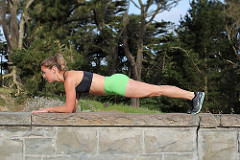
fitness-plank

As a fitness instructor and personal trainer, I am asked what kind of workout should I do?  And of course, my answer always starts with the same thing:  It depends.

It depends on several factors that will differentiate your workout from another person’s.  You’ll need to ask yourself some questions to find out what is right for you.   Read More→

Nutrition and Exercise

Workout Mistakes that Sabotage Results

Posted on November 8, 2016
by Kerri McBeath

mistakes-post

Give a read to this post written by Curtis trainer Kevin Chang.  Avoid these mistakes that sabotage your progress and leave you frustrated, confused, and exhausted. Even if you worked out for years, it could still happen to you.

Massive Expectations

Many beginners start with the idea of making great progress in a short period of time (such as a major weight loss goal).  Sadly, this too often leads to frustration. Instead, break your massive goal into smaller, attainable steps. Building these steps will help build confidence, and get you closer to your goal. Read More→

Nutrition and Exercise

Get Back on Track: 7 Strategies to Help You Bounce Back After Slipping Up

Posted on September 1, 2016
by Kerri McBeath
No Comments
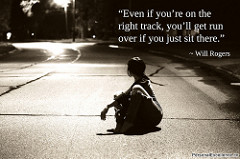
9630418308_11c4bc74db_m
 This article has some great tips on getting yourself back on track if you’ve strayed from your regular routine over the summer.  Remember, you don’t have to be back in the saddle the first week:  take some time and form a strategy that sets you up for success in the long run.
By James Clear    |   

We’ve all been there…

You follow your diet religiously for a week and then break it with a weekend binge. You commit to working out more, hit the gym for two days, and then struggle to get off the couch after a long day of work. You set a vision for your career and get excited by the possibilities, only to get dragged down in everyday responsibilities and not return to your dream until months later.

I’ve been there too, but as time rolls on I’m beginning to realize something important:

These small hiccups don’t make you a failure, they make you human. The most successful people in the world slip up on their habits too. What separates them isn’t their willpower or motivation, it’s their ability to get back on track quickly.

There will always be instances when following your regular routine is basically impossible. You don’t need superhuman willpower, you just need strategies that can pull you back on track. Habit formation hinges on your ability to bounce back.

With that said, here are seven strategies that you can use to get back on track right now…

1. Schedule your habits into your life.

Give your habits a specific space in your life. There are two main options for making this happen…

Option 1: Put it on your calendar.

Want to get back on track with your writing schedule? 9am on Monday morning. Butt in chair. Hands on keyboard. That’s when this is happening.

Want to exercise? Give yourself a time and place that it needs to happen. 6pm every Monday, Wednesday, and Friday. I’ll see you in the gym.

Option 2: Tie it to your current behavior.

Not all of your habits will fit a specific time frame, but they all should have a trigger that acts as a reminder to do them.

Want to floss? Everyday after brushing your teeth. Same order, same way, every time.

Want to be happier? Every time you stop at a red light, tell yourself one thing you’re grateful for. The red light is the reminder. Same trigger, same sequence, every time.

The bottom line is this: it might be nice to tell yourself that you’re going to change, but getting specific makes it real and gives you a reason and a reminder to get back on track whenever you slip up.

Soon is not a time and some is not a number. When and where, exactly, are you going to do this? You might forget once, but what system do you have in place to automatically remind you the next time?

2. Stick to your schedule, even in small ways.

It’s not the individual impact of missing your schedule that’s a big deal. It’s the cumulative impact of never getting back on track. If you miss one workout, you don’t suddenly feel more out of shape than you were before.

For that reason, it’s critical to stick to your schedule, even if it’s only in a very small way.

Don’t have enough time to do a full workout? Just squat.

Don’t have enough time to write an article? Write a paragraph.

Don’t have enough time to do yoga? Take ten seconds to breathe.

Don’t have enough time to go on vacation? Give yourself a mini–break and drive to the neighboring town.

Individually, these behaviors seem pretty insignificant. But it’s not the individual impact that makes a difference. It’s the cumulative impact of always sticking to your schedule that will carry you to long–term success.

Find a way to stick to the schedule, no matter how small it is.

3. Have someone who expects something of you.

I’ve been on many teams throughout my athletic career and you know what happens when you have friends, teammates, and coaches expecting you to be at practice? You show up.

The good news is that you don’t have to be on a team to make this work. Talk to strangers and make friends in the gym. Simply knowing that a familiar face expects to see you can be enough to get you to show up.

4. Focus on what you can work with.

We waste so much time focusing on what is withheld from us.

This is especially true after we slip up and get off track from our goals. Anytime we don’t do the things we want to do — start a business, eat healthy, go to the gym — we come up with excuses…

“I don’t have enough money. I don’t have enough time. I don’t have the right contacts. I don’t have enough experience. I need to learn more. I’m not sure what to do. I feel uncomfortable and stupid.”

Here’s what I want you to think instead:

“I can work with this.”

Because you can. The truth is that most of us start in the same place — no money, no resources, no contacts, no experience — but some people (the winners) choose to get started anyway.

It’s not easy, but I promise you that your life will be better if you choose to feel uncomfortable and make progress, rather than complain and make excuses. Shift your focus from what is withheld from you to what is available to you.

It’s rare that your circumstances prevent you from making any progress. You might not like where you have to start. Your progress might be slow and unsexy. But you can work with this.

5. Just because it’s not optimal, doesn’t mean it’s not beneficial.

It’s so easy to get hung up on doing things the optimal way and end up preventing yourself from doing them at all.

Here’s an example…

“I really want to eat Paleo, but I go to Chipotle every Friday with my friends and I like to get sour cream and cheese on my burrito and I know that’s not Paleo. Plus, I have a book club meeting every Tuesday and we always have ice cream and I don’t want to be the only one not joining the group. Maybe I should try something else?”

Seriously? Is eating clean five days per week better than not eating clean at all?

Yes, I believe it is.

In fact, eating healthy one day per week is better than none at all. Make that your goal to start: eat clean every Monday.

Just because you can’t stick to the optimal schedule, doesn’t mean you shouldn’t stick to it at all. Good habits are built gradually. Start slow, live your life, and get better along the way. Progress is a spectrum, not a specific place.

Furthermore, if you haven’t mastered the basics, then why make things harder for yourself by fretting about the details?

The optimal strategies will make the last 10% of difference. Meanwhile, 90% of your results will hinge on you simply sticking to the basics: don’t miss workouts, eat real food, do the most important thing first each day. Master the fundamentals now. You can optimize the details later.

6. Design your environment for success.

If you think that you need more motivation or more willpower to stick to your goals, then I have good news. You don’t.

Motivation is a fickle beast. Some days you feel inspired. Some days you don’t. If you want consistent change the last thing you want to rely on is something inconsistent.

Another great way to overcome this hurdle and get back on track is to design your environment for success.

Most of us acknowledge that the people who surround us influence our behaviors, but the items that surround us have an impact as well. The signs we see, the things that are on your desk at work, the pictures hanging on your wall at home … these are all pieces of our environment that can trigger us to take different actions.

When I wanted to start flossing consistently, one of the most useful changes I made was taking the floss out of the drawer and keeping it next to my toothbrush on the counter. It sounds like a silly thing to focus on, but the visual cue of seeing the floss every time I brushed my teeth meant that I didn’t have to remember to pull it out of the drawer.

With this simple environment change, I made it easy to do the new habit and I didn’t need more motivation or willpower or a reminder on my phone or a Post-It note on the mirror.

If you want to hear more about my riveting flossing adventures (and how to stick to small healthy habits), read this.

Another example of environment design is the “green plate trick” that I suggest as an easy way to lose weight and eat more green vegetables. You can read about this strategy (and about the research explaining why it works) in this article.

7. Care.

It sounds so simple, but make sure that the habits that you’re trying to stick to are actually important to you.

Sometimes forgetting your habit is a sign that it’s not that important to you. Most of the time this isn’t true, but it happens often enough that I want to mention it.

It’s remarkable how much time people spend chasing things that they don’t really care about. Then, when they don’t achieve them, they beat themselves up and feel like a failure for not achieving something that wasn’t important to them all along.

You only have so much energy to put towards the next 24 hours. Pick a habit that you care about. If it really matters to you, then you’ll find a way to make it work.

Get Back on Track

Change can be hard. In the beginning, your healthy habits might take two steps forward and one step back.

Anticipating those backwards steps can make all the difference in the world. Develop a plan for getting back on track and recommit to your routine as quickly as possible.
Read More→

Nutrition and Exercise

Practical Tips for Clean Eating

Posted on September 1, 2016
by Kerri McBeath
No Comments

13384051455_fd0ac20a17_m


Let me start this blog post with a confession:  I like to eat.  And I like to cook.  So dieting has never been a really good option for me.  I lost 33 pounds on Weight Watchers years ago, but as they say it’s not a diet, it’s making lifestyle changes that you can live with long term.  And I did make some very important lifestyle changes through the program:  I stopped drinking Coke because I couldn’t stand the aftertaste of Diet Coke; I had a reality check on portion sizes (especially when eating out); and I learned about coping strategies for emotional eating.  I actually became a WW leader – I shared my story and helped to support those trying to lose weight.  Read More→

Nutrition and Exercise

Your Own Vacation Triathlon

Posted on August 1, 2016
by Kerri McBeath
No Comments

3618128274_e844780422_m

I met up with some acquaintances that I hadn’t seen in a couple of years.  I found out that one of the couples was going to do their first triathlons the next day.  I was impressed as I never thought of them as the tri types and it was certainly not something that I had ever considered doing.

So it got me to thinking:  while you’re on holidays and away from your regular workout routine, could you create your own “holiday triathlon” to keep you on track with your fitness?  You don’t have to work to the extent of a real tri but using the concept of 3 different exercises to work muscles differently and avoid boredom.  Read More→

Nutrition and Exercise

6 Best and Worst Foods and Drinks for Summer

Posted on July 7, 2016
by Kerri McBeath
No Comments

“Summertime and the living is easy” or so goes the old song.  We all want to relax and not work so hard in the kitchen – it’s hot and we’re ready to change up the routine.  But a lot of traditional summer fare is loaded with calories, fat, sugar and sodium.  Below you will find super summer foods and some that you should avoid.

Read the following article excerpted from healthfitnessmag.com that lists some of the worst nutritional offenders, as well as some of the best.

6 BEST AND WORST FOODS

Rebecca Miller, MPH, RD, LDN

1. Deli meat – Even though meats like turkey, chicken, ham and roast beef are lean protein sources, it can come with a high price in the form of sodium.   Try to use baked/roasted skinless chicken, beans/legumes, or sliced hard boiled eggs in the place of your standard cold-cuts on a sandwich, low carb/high fiber tortilla, or lettuce wrap.

2. High fat meats – The saturated fat found in animal meats poses many negatives impacts on our health ranging from higher calorie content to increased risk of high cholesterol and heart disease. Select leaner meats and trim off any visible fat. Instead of a rib-eye or porterhouse steak, opt for a filet, tenderloin, or sirloin steak.

3. Chips – Often grabbed in a pinch for a quick snack chips, whether fried or baked, add sodium and empty calories to our diet since they lack beneficial nutrients like fiber and protein.  Try Beanitos, for about 140 calories per serving, you’ll at least get some fiber and protein from the beans to keep your hunger at bay.

AND DRINKS FOR SUMMER

4. Lemonade – Most of us know the high sugar and calorie content of regular-sugary sodas and sweet tea, but you might not lump lemonade in this category as well, even though you should! With just as much sugar (if not more) than in a soft drink, lemonades often get a ‘better for you vibe’.  Make your own version with a non-calorie plant based sweetener like Truvia or New Orleans locally-owned company Swerve rather than granulated sugar or even honey or agave.

5. Sports drinks – Here’s another sugar and calorie source in the form of a liquid that can quickly add up to undesired calorie consumption during the day. It’s a common myth that the average American needs a sports drink to replenish electrolytes after a hot day in the sun or workout.  Try the zero versions to get rid of the empty calories or try the plant-based sweetened water enhancers to quench your thirst and hydrate you this summer.

6.  Coconut water – Another beverage that gets a lot of press these days due to its popularity to replenishing lost electrolytes is coconut water. The sodium and potassium can be good for endurance enthusiasts or athletes, but for someone trying to lose weight/eat healthier or has high blood pressure or impaired kidney function, this is not always your best bet.  Select no-sugar-added varieties or plain coconut water if you fall into the category of truly needing the potential benefits of this drink.

6 Super Summer Foods and Beverages

Water Enhancers – Spice up your beverages and the likelihood of increasing your fluid intake by flavoring your water or unsweetened tea with flavor enhancers such as Stur or Crystal Light Pure, both of which are made with plant-based sweetener and add little-to-no calories.

Chicken Sausage – Look for nitrate/nitrite free sausages that make great swap-outs to high fat hot dogs, brats, and sausages.

Any Fresh Fruit – Simply add to the blender with your morning smoothie, pair together with a 100-calorie pack of nuts as an afternoon snack, or save for your after-dinner dessert since they add hydration, vitamins, minerals, and nutrients and some fiber to your day.

Any Non-starchy Vegetable – Toss them together in a salad, dip them in a 100-calorie to-go portion of hummus or guacamole, or throw them on the grill for low calorie, higher fiber snacks or sides to your meal.

Plain Greek Yogurt – A great protein source that also counts towards your fluid needs for the day. Use it as the protein source for your morning smoothie, make your own parfait with fresh fruit and a sprinkling of lower sugar granola or Kashi go lean cereal, or substitute it for mayo or sour cream in your favorite homemade dip or dressing. To sweeten it up without adding sugar to it (like with the vanilla or flavored varieties), just mix in some vanilla extract and plant-based sweetener like Truvia.

Dressings and Marinades – While some may be slightly higher in sugar, fat, or sodium, if you’re using just a little bit, it can be an easy way to add versatility to your usual salad or to marinate your meats before throwing them on the grill.  A good rule of thumb is go with the reduced-fat ones rather than original or ‘free’ varieties.

Rebecca Miller, MPH, RD, LDN is a registered dietitian nutritionist with Ochsner’s Elmwood Fitness Center. She writes a blog called Twisted Nutrition and can be found at twistednutritionandme.blogspot.com.

Nutrition and Exercise

Core Travel Workout – perfect for a hotel room floor!     

Posted on July 7, 2016
by Kerri McBeath
No Comments

By Laurie B, Certified Personal Trainer

Whether you’re traveling for business or on a family holiday, it’s difficult sometimes to fit in a workout.  But chances are you have 10 minutes everyday for a quick core workout that you can even do in your hotel room…or by the pool if you’re feeling brave!

Do each exercise at a slow tempo for 45 seconds.  Repeat the Circuit.

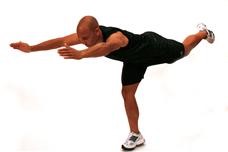
Standing Superman makes a great warm up, improves balance and engages the core muscles. Remember not to hold your breath and turn your thumbs up.  Alternate sides, increasing the time you can hold the position…it’s great in bare feet too.

Standing Superman

Read More→

Nutrition and Exercise

Strokes On The Rise Among Younger Adults

Posted on June 6, 2016
by Kerri McBeath
No Comments

June is Stroke Awareness Month and when I first read this article, I was frightened and uplifted at the same time.  The story of Troy, a 40 something stroke victim is scary – recalling the initial episode and the effects of the stroke on his body and on his life.  But, as you hear about his recovery, you see that he is coming back and due to his age and his determination, he will recover the use of the left side of his body.

As you read this, take note of the reasons why experts think younger people are having 10 percent of the strokes.  Take some time to reflect on whether you are at risk of stroke – look at your lifestyle, your stress level and other potential risk factors.

Strokes On The Rise Among Younger Adults

by Rae Ellen Bichell

“I am what I like to call ‘new stroke’,” says Troy Hodge, a 43-year-old resident of Carroll County, Md. With a carefully trimmed beard and rectangular hipster glasses, Hodge looks spry. But two years ago, his brain stopped communicating for a time with the left half of his body.

He was at home getting ready for work as a food service director at a nearby nursing home. Hodge remembers entering the downstairs bathroom to take his blood pressure medications. He sat down on the bathroom floor and couldn’t get up. He says he felt so hot, he actually splashed some toilet water on his face because he couldn’t reach the sink.

When Hodge didn’t show up for work, a colleague got worried and came over. She called 911 when she found him on the floor.

“I remember telling her not to let me die,” says Hodge, “and from then on I really don’t remember that much.” He woke up a day or so later at a trauma center one state over, in Delaware.

“Troy experienced what we call an intracerebral hemorrhage, which basically just means bleeding within the substance of the brain,” says Dr. Steven Kittner, a neurologist at the University of Maryland School of Medicine. Hodge’s high blood pressure probably damaged the tiny vessels in his brain, Kittner says.

Hodge is one of many Americans having strokes at a younger age. About 10 percent of all strokes occur in people between 18 and 50 years old, and the risk factors include some that Hodge had: high blood pressure, overweight, off-kilter cholesterol, smoking and diabetes.

As part of his occupational therapy session, Troy Hodge gets little jolts of electricity through patches on his left arm. The stimulation is thought to help rekindle communication between the brain and nerves and muscles that were affected by his stroke.

As part of his occupational therapy session, Troy Hodge gets little jolts of electricity through patches on his left arm. The stimulation is thought to help rekindle communication between the brain and nerves and muscles that were affected by his stroke.

Matailong Du/NPR

In particular, ischemic strokes — caused by a blockage in the blood vessel, rather than a bleed — are sharply increasing among people under age 50, statistics show.

This is not to say that stroke is becoming a disease of young people.

“The majority of strokes are still happening in older individuals, says Dr. Amytis Towfighi, a vascular neurologist with the University of Southern California. “What’s concerning is that the incidence and prevalence of stroke amongst younger individuals has increased, and it’s increasing significantly.”

The most likely underlying reason, she says, is obesity; the constellation of health issues that come with it can wear down or block a person’s blood vessels.

A national survey found that between 1995 and 2008, the increased number of young people (ages 15 to 44) who were hospitalized for stroke closely followed an increase in several chronic conditions, including high blood pressure, diabetes, obesity and lipid disorders.

“People who are obese are at greater risk for high blood pressure, and high blood pressure is the leading risk factor for stroke,” says Dr. Mary George, senior medical officer with the CDC’s Division for Heart Disease and Stroke Prevention and an author on the national study. In 1995, about 3 percent of patients between 15 and 34 years old who had ischemic strokes were obese. By 2007, 9 percent were obese.

“One in three men in that age group had hypertension,” says George. “That’s very high.”

Hodge is a big guy, and he says he’d had high blood pressure for a long time. Perhaps, on the day of his stroke, the extra pressure on his circulatory system just caught up with him. Like water in a bent hose, the volume of blood moving through his body overloaded a delicate passageway deep inside his brain, and the vessel burst.

It was key to his survival that Hodge’s colleague found him quickly, so that he was able to get to surgeons who could drain some of the blood before the stroke caused irreversible damage. Still, in one day, Hodge became a patient at a facility just like the ones he used to work in.

“You know how they say, ‘When you have a baby it changes your life?’ Well, this changes your life,” he says.

Occupational therapist Lydia Bongiorni works with Troy Hodge on grasping and lifting objects at a rehabilitation center in Gwynn Oak, Md. "You basically have to start over again," Hodge says. "You retrain your brain to use your limbs."

Occupational therapist Lydia Bongiorni works with Troy Hodge on grasping and lifting objects at a rehabilitation center in Gwynn Oak, Md. “You basically have to start over again,” Hodge says. “You retrain your brain to use your limbs.”

Matailong Du/NPR

He couldn’t walk or do anything that involved both hands. He started making lists, he says, because his short-term memory took a hit. And even in the bitter cold, he’ll now head out the door with just a hoodie on.

“I’m not much of a coat wearer anymore because it’s just too hard putting it on,” Hodge explains.

With only half his body under control, he says, something as simple as getting dressed, cutting an onion or stepping off a curb suddenly became a huge task. Putting on socks, he says, is “an ordeal. It’s like an Oprah show.”

“You don’t think of things that you do until you can’t do them,” he says. “You basically have to start over again. I mean, you retrain your brain to use your limbs. You retrain your brain to remember. You retrain everything. It’s pretty devastating.”

Hodge ended up living in a rehab facility for a year, relearning in his 40s how to do things that he’d done almost every day of his life.

Towfighi says a lot of her younger patients have similar experiences. She oversees neurological care for the Los Angeles County Department of Health Services, where the average age of stroke patients is 56. Even though young people tend to recover their abilities better, they can also have a tough time with recovery.

“It often affects the entire family when a young individual has a stroke,” Towfighi says, because the family loses a breadwinner. “I also do research on depression after stroke and found that a younger age is a risk factor for depression after stroke.”

Hodge didn’t get depressed, but he did have to make some tough adjustments. He told his 18-year-old daughter he wouldn’t be able to pay for her college or her car, and that she’d have to be on her own for a bit because he couldn’t help out the way he used to.

“It was a long year, and there were times when I would just cry and not stop crying. But it passed,” says Hodge.

Now, he has a one-story apartment and works part time at an exercise facility for the disabled. He’s working on his blood pressure and trying to cut out cigarettes. Once a week, he goes to occupational therapy to work on everyday skills. To help get through it, he named his problem limbs. His left leg is Eddie. His left arm is Douglas. Hodge’s cane is named Genevieve, after his mom.

“Eddie has done very well,” Hodge says. “I think he will continue to do well. Douglas? I talk to Douglas because I’m not so sure about him. He just kind of does his own thing.”

Giving one’s troubled limbs a nickname or pep talk isn’t unusual, says Lydia Bongiorni, an occupational therapist who worked with Hodge when he first entered rehab. “I’ve had quite a few patients do that,” she says. “It shows a sense of humor. That’s good.”

At an outpatient neurorehabilitation clinic at the University of Maryland, Bongiorni and Hodge spend a lot of time working with Douglas — Hodge’s notoriously uncooperative left arm and hand. It’s stuck in a stiff curl.

“Troy had a stroke a couple years ago, and people used to think you would never get movement back,” says Bongiorni. But Hodge’s muscles are fine, she explains — it’s just the messaging system from his brain to his muscles that needs repair. “I tell people that the brain wants to reconnect with that arm again, and we have to tap into different pathways of doing that.”

With a device the size of a sandwich, Bongiorni delivers a jolt of electricity through patches stuck on Hodge’s arm. It takes a lot of tiny muscles working together to move a hand, and the electrical stimulation is thought to send signals that wake up the brain to the communication it needs to do with nerves and muscles.

Hodge’s face strains as he grasps a deodorant stick and brings it haltingly up to his armpit. Bongiorni is trying to get him to use his left hand as a tool, rather than like a stump. They practice washing dishes, walking with a weight in that hand, and bringing a cup up to his mouth. Next on the list of Hodge’s goals: taking out the trash.

“I’m not up to walking it to the dumpster just yet,” he says. “I’m going to get there. I’d say by the summertime I’ll probably be taking it to the dumpster.”

Regaining his motion is not going to be easy. He’s going to have to keep practicing these things every day on his own, like a musician mastering an instrument. But, he says, “I’m only 43, so I have time to do that.”


Nutrition and Exercise
← Previous Page
Next Page →

Sign Up For Our Newsletter

chnewsletterbutton

Recent Posts

  • The Great Outdoors: A High-Performance Add-On to Your Training Routine
  • Refresh Your Routine
  • A Woman’s Guide to Pelvic Floor Wellness
  • Why Pre & Post Workout Nutrition Is Important
  • Qualities of Calories

Categories

  • Avoiding Illness
  • Corporate Wellness
  • Curtis Health Team
  • Fitness Centre
  • Fitness Facility Management
  • General
  • Getting Outdoors
  • Gym Hygiene
  • Health & Wellness
  • Heart Health
  • Men's Health
  • Mental Health
  • Mind/Body Wellness
  • Mindset
  • Miscellaneous
  • Nutrition and Exercise
  • Recipes
  • Setting Goals
  • Training
  • Uncategorized
  • Women's Health
  • Workplace Wellness

Home | About Us | Meet the Team | How Can We Help? | Careers | Employers | Property Managers | Individuals | Contact Us | Privacy Policy

Copyright © 2026 Curtis Health

CURTIS_LOGO_NEW_Blue

Head Office:  1098 Canyon BLVD, North Vancouver, BC V7R 2K4 Telephone: 604.921.2348

Subscription Terms & Conditions
  1. Billing
    • Your credit card will be automatically charged each month through Square.
  2. Commitment & Cancellation
    • There is no long-term contract.
    • You may cancel your subscription by contacting us directly. Please allow 5 business days for processing prior to your next billing date to avoid additional charges.
    • As our class schedule is organized on a monthly basis, partial months will not be refunded or pro-rated.
    • Your subscription is for your individual enjoyment only. Please do your part to ensure appropriate use of our content.
Curtis Health Is Partnering With Kintec: Footwear + Orthotics

Kintec is offering all Curtis clients (including friends and family) expert shoe fitting to best suit your needs at a 15% discount on regular price footwear. 

Click here to access coupon code

Workshop Information Request